
Omega-3 for Athletes: What EPA and DHA Really Do for Recovery, Muscle and Heart
EPA and DHA cut inflammation and DOMS measurably, but barely move hypertrophy in young lifters. What the data actually shows on dose, TG vs. EE form, and algae oil.
Contents
Direct answer: omega-3 affects inflammation and muscle damage, barely hypertrophy
Regular EPA and DHA supplementation cuts inflammation markers and DOMS after hard training measurably. But it barely moves hypertrophy in young, healthy lifters (ISSN 2025 Position Stand). In older adults the story is different: a 2025 meta-analysis of 9 RCTs in 286 subjects shows omega-3 plus resistance training builds more strength than resistance training alone (Lopes et al. 2025).
Short: omega-3 isn't a booster for 25-year-old bodybuilders, but a moderate helper for recovery, older athletes, and chronic inflammatory load.
What we're talking about
EPA (eicosapentaenoic acid) and DHA (docosahexaenoic acid) are long-chain omega-3 fatty acids from fish oil. Plant omega-3 (ALA from flax, chia, walnut) converts to EPA at only 5 to 10 percent, almost none to DHA. Plant-only people either need algae oil (direct EPA/DHA) or live with low bioavailability.
In the body, EPA/DHA get incorporated into membranes of muscle cells, mitochondria, and neurons. That shifts the ratio of pro- to anti-inflammatory eicosanoids toward anti-inflammatory, and over weeks makes membranes more fluid and reactive.
What the evidence actually shows
For DOMS (delayed muscle soreness) after eccentric load, several meta-analyses show small to moderate effects: 30 to 50 percent lower CK and subjective pain scores at 24 to 72 hours after exercise (Heileson et al. 2024, ISSN Review). In competition sport that's a real edge on race days.
Effect | Young athletes | Older adults (≥65) |
|---|---|---|
Hypertrophy | Small to none | Small to moderate |
Max strength | Small to none | Moderate |
DOMS / muscle soreness | Moderately reduced | Moderately reduced |
Inflammation markers (CRP) | Moderately reduced | Strongly reduced |
Cardiovascular mortality | Small, long-term | Moderate, long-term |
Dose: how much and what form
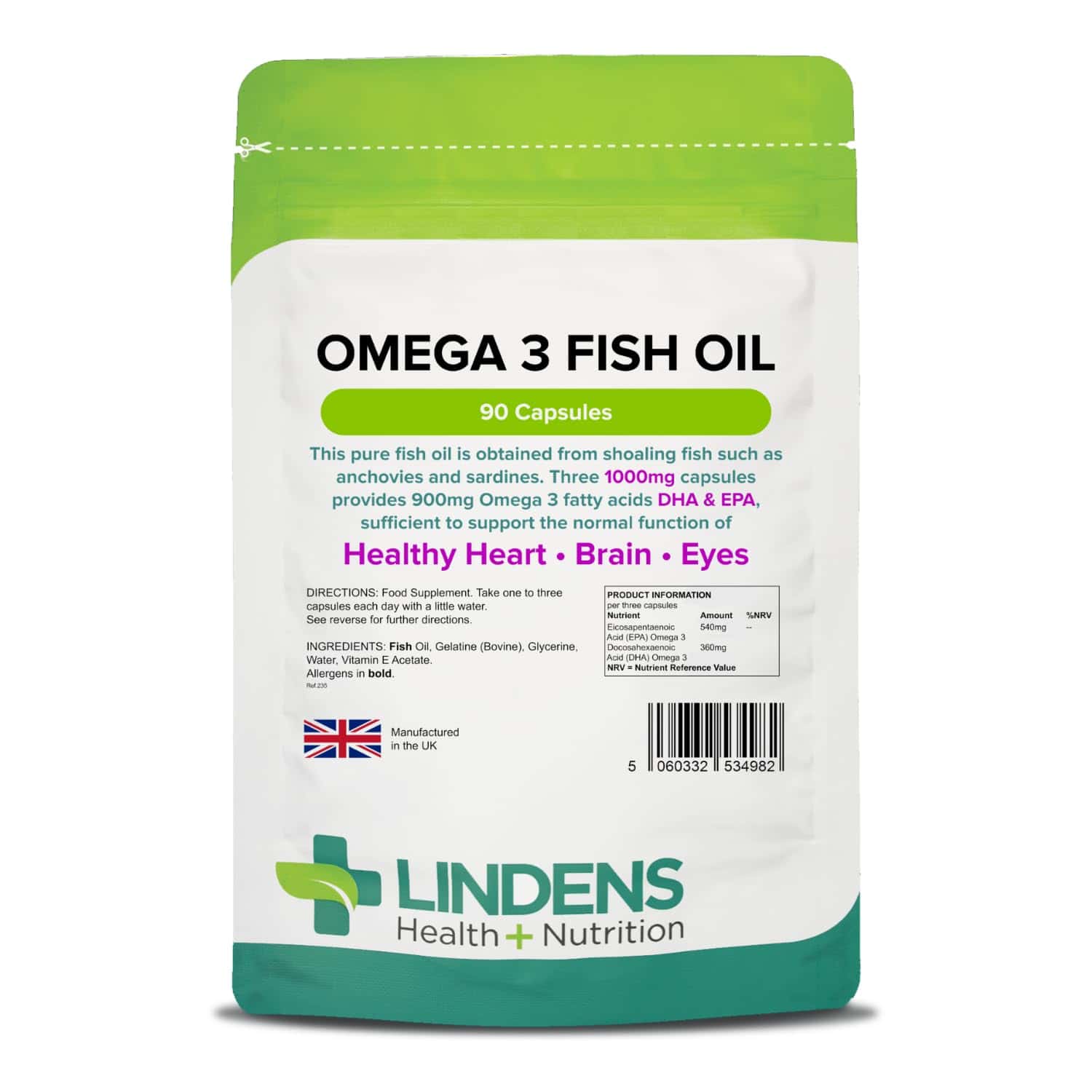
ISSN recommends 2 to 3 g EPA+DHA per day for athletes, with at least 1 g EPA. That's 2 to 3 times the dose in most cardio studies (1 g/day), but the most robust setting for recovery effects.
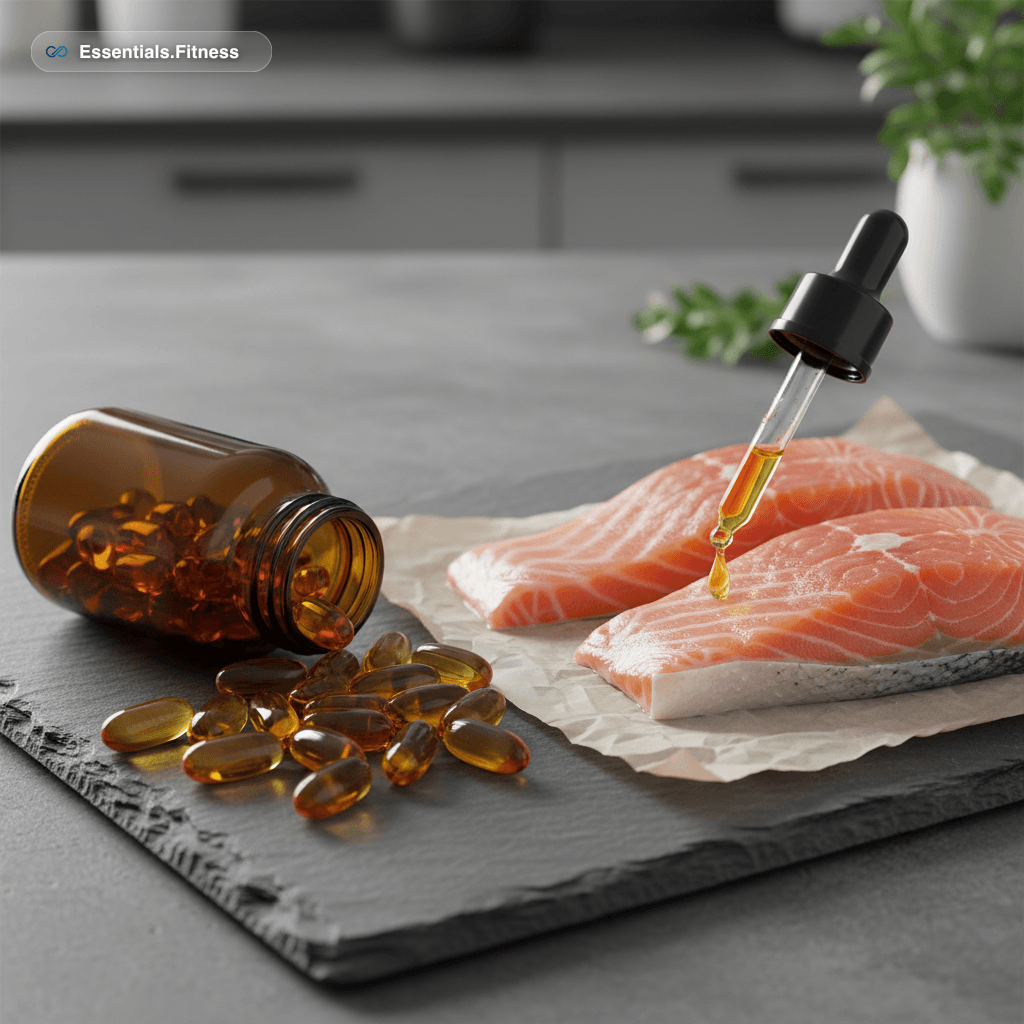
In food: 100 g salmon delivers about 2 g EPA+DHA, 100 g mackerel about 2.5 g, 100 g sardines about 1.5 g. Eating fatty fish 2 to 3 times a week covers most of the need. If you don't, take 1 to 3 g/day from capsules.
Who actually benefits
- Older adults (≥65): strongest effect on muscle strength, function, inflammation
- Athletes with high training load: less DOMS, faster recovery between sessions
- Competition athletes: multi-day events (marathon series, stage races)
- People with low omega-3 index (under 4 %, measured in blood)
- Vegetarians/vegans without fatty fish in their diet
Young, healthy lifters on a balanced diet see the smallest effect. For them it's not a mandatory supplement, just an edge-case optimisation.
Plant vs. fish omega-3
ALA from flax, chia, and walnut isn't worthless, but it doesn't cover EPA/DHA needs. A daily serving of flax delivers ALA, of which the body converts only 1 to 5 percent into EPA and barely any DHA. For sport-related recovery, algae oil is the only plant alternative with directly available EPA/DHA.
What's still open
The optimal omega-3 index (percentage in red-blood-cell membranes) for sport-related effects isn't settled. Cardiology defines values above 8 percent as optimal, sport-physiology studies usually don't measure index. If you want precision, a dried-blood-spot test gives you the number.
Long-term effects in young, healthy athletes (years of continuous supplementation) aren't cleanly documented either. Most RCTs run 4 to 12 weeks.
Short: 2 g EPA+DHA per day from fatty fish or quality capsules, with a fatty meal, plus vitamin E for stability. Effects are real but small in young athletes, larger in older trainees with chronic inflammatory load.
Frequently asked questions
Is flax oil enough instead of fish oil?
No, not for EPA/DHA needs. ALA from flax converts at only 1 to 5 % to EPA and barely any DHA. For sport-related effects: fish oil or algae oil (vegan).
When in the day should I take it?
With a fatty meal, time of day doesn't matter. On an empty stomach absorption drops noticeably. Splitting the dose across two meals keeps blood levels more even.
How much mercury is in fish oil?
Quality molecularly distilled products sit well below safety limits. Algae oil is mercury-free. Generic supermarket fish (salmon, sardines) is mostly fine; large predator fish (swordfish, tuna) carry more.
Do I need omega-3 if I eat salmon twice a week?
Probably not extra, if the salmon is fresh (frozen wild salmon has less EPA/DHA). Want certainty: omega-3 index via dried-blood-spot test, aim above 8 %.
Sources & Studies
- [1]Jäger R, Heileson JL, Abou Sawan S, et al.. International Society of Sports Nutrition Position Stand: Long-Chain Omega-3 Polyunsaturated Fatty Acids. (2025). 10.1080/15502783.2024.2441775
- [2]Gravina L, Brown FF, Alexander L, et al.. Omega-3 Fatty Acid Supplementation on Post-Exercise Inflammation, Muscle Damage, Oxidative Response, and Sports Performance in Physically Healthy Adults: A Systematic Review of Randomized Controlled Trials. (2024). 10.3390/nu16132044
- [3]Huang YH, Chiu WC, Hsu YP, et al.. The effects of omega-3 polyunsaturated fatty acids on muscle and whole-body protein synthesis: a systematic review and meta-analysis. (2024). 10.1093/nutrit/nuae049
- [4]Lv ZT, Zhang JM, Zhu WT. Omega-3 Polyunsaturated Fatty Acid Supplementation for Reducing Muscle Soreness after Eccentric Exercise: A Systematic Review and Meta-Analysis of Randomized Controlled Trials. (2020). 10.1155/2020/8062017
- [5]Gencer B, Djousse L, Al-Ramady OT, et al.. Effect of Long-Term Marine ω-3 Fatty Acids Supplementation on the Risk of Atrial Fibrillation in Randomized Controlled Trials of Cardiovascular Outcomes: A Systematic Review and Meta-Analysis. (2021). 10.1161/CIRCULATIONAHA.121.055654
- [6]Thielecke F, Blannin A. Omega-3 Index as a Sport Biomarker: Implications for Cardiovascular Health, Injury Prevention, and Athletic Performance. (2024). 10.3390/nu16101601
Comments
Be the first to leave a comment.
You might also like
Beta-Alanine: What Studies on Carnosine, Performance and Tingling Actually Show
Beta-alanine works in a narrow window between 60 and 240 seconds of high-intensity effort. What the trials actually say about dose, effect size, target users and the famous paresthesia.

How to treat DOMS the evidence-based way: massage, tart cherry and ice baths in 2026
DOMS doesn't come from lactic acid. It comes from micro-tears under eccentric loading. What massage, tart cherry, compression, ice baths and stretching actually do for muscle soreness, according to the latest meta-analyses.